
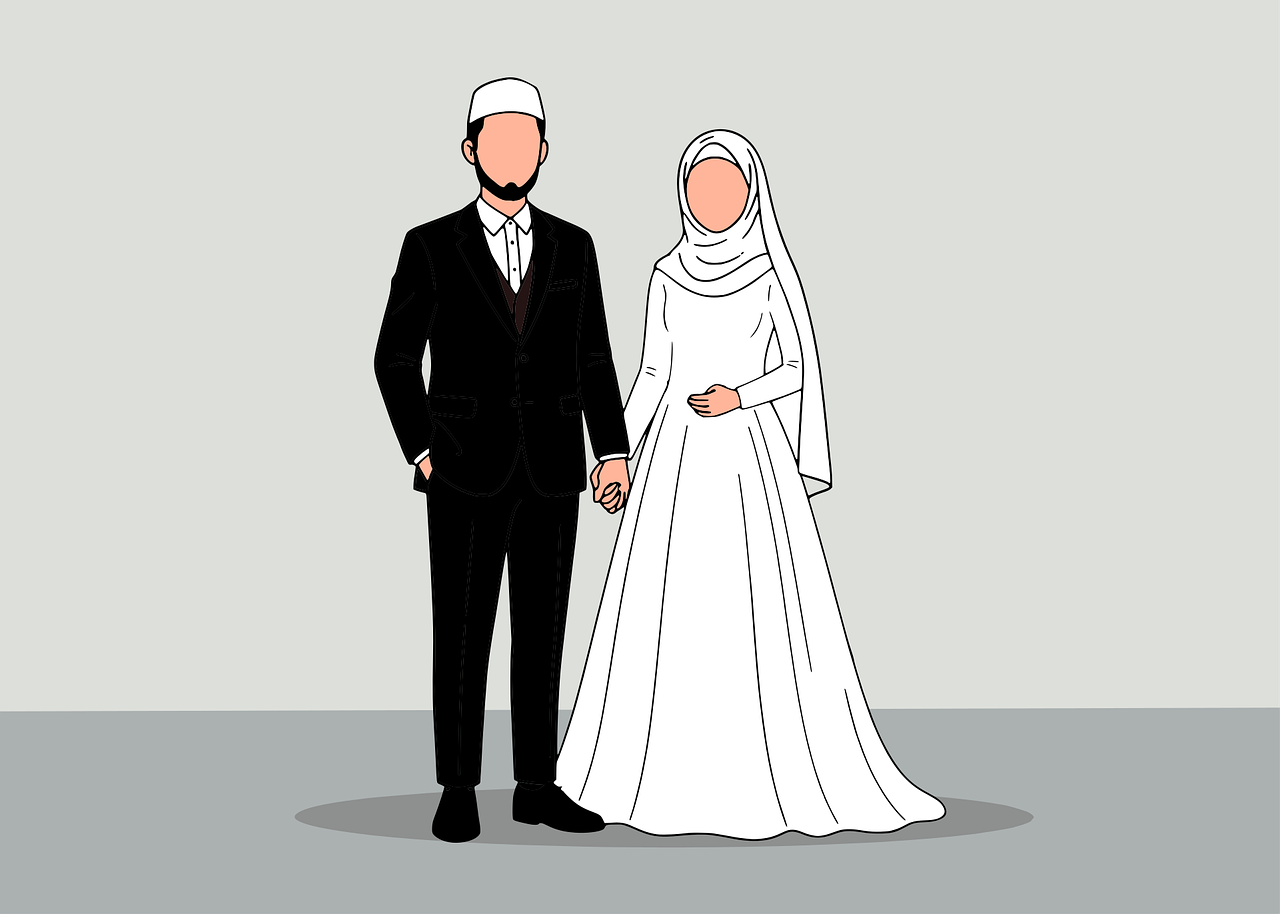
In Islam, marriage is a beautiful relationship between two people. It is a ceremony that joins a man and a woman under the Sharia law. Not only does it strengthen society, but it also provides a stable foundation for generations to come.
There are many rules governing marriage in Islam to ensure the union is as harmonious as possible. This blog will explore some of these rules and highlight what the Quran and Sunnah state about them.
Rules Of Marriage: Significance
The rules of marriage in Islam have a significance that transcends the relationship between a husband and wife. They shape the environment in which this relationship can blossom to its full potential. These rules help navigate numerous cultural and traditional beliefs and maintain a relationship based solely on the teachings of Islam. They ensure fairness, trust, respect, and love, providing a solid foundation for a long-lasting, healthy relationship.
Rules Of Marriage: Explained
There are specific rules of marriage in Islam that both parties have to follow to ensure their marriage is valid according to the Shariah.
Interfaith Marriages
The first and foremost rule of marriage is that it can only be done in “religions” that Allah has permitted. Islam has given permission to men to marry women from the “People of the Book” (Christians and Jews). These are the only non-Muslim women that Muslim men are permitted to marry. Women of other religions can’t be taken as wives. Allah SWT states in the Quran:
“This day are (all) good things made lawful for you. The food of those who have received the Scripture is lawful for you, and your food is lawful for them. And so are the virtuous women of the believers and the virtuous women of those who received the Scripture before you (lawful for you) when you give them their marriage portions and live with them in honor, not in fornication, nor taking them as secret concubines.”
As for Muslim women, they are not allowed to take husbands except from Muslim men. Shariah does not permit them to marry non-Muslim men. The Quran states:
“And give not your daughters in marriage to idolaters till they believe.”
Marriage Only To A Non-Mehram
A Muslim can only marry their non-mehrams. Whether it is a man or a woman, they both have to choose spouses who are not their mehrams. One thing to keep in mind here is that in certain situations, the mehrams of a woman are different than the mehrams of a man. Therefore, it is essential to educate oneself about it before taking the next step.
The Consent Of Both Parties
Consent is the cornerstone of Islam. The religion has highlighted the importance of consent in numerous matters throughout every Muslim’s life. The same holds in marriage. Numerous hadiths state that consent is the first requirement for a marriage in Islam. Coercion, forcing, or threatening a man or woman to marry somebody else is not the way of Islam and should be avoided.
And while many cultures ask men for their permission and allow them to marry with their consent, this is not the case for women, which is wrong. Many hadiths emphasize the importance of a woman’s consent to her marriage.
Abu Huraira (RA) narrated that the Messenger of Allah (PBUH) said, “A woman who has previously been married—whether divorced or widowed—should not be married off without being consulted, and a virgin should not be married until her permission is sought.” The Companions asked, “How is a virgin’s consent recognized? ” He (PBUH) replied, “Her silence is her approval.”
The Wali For The Bride
‘Aishah (RA) narrated that the Messenger of Allah (PBUH) said, “If a woman marries without the involvement of her guardian, then her marriage is invalid—invalid, invalid.”
The wali is the guardian of the bride and is the one responsible for her before her marriage. This condition brings an extra layer of protection to the process and ensures the proposal is as compatible with the bride’s personality and standard of living as possible. A wali is most commonly a father, but can also be a brother, son, uncle, or grandfather.
The jurists have arranged the men who can serve as the bride’s wali in a particular order, which is as follows:
- The bride’s father.
- Then whoever the father may have appointed before his death.
- Then her great-grandfather or paternal grandfather.
- Then her son,
- Then his sons or grandsons.
- Then her full brother.
- Then her half-brother (through the father)
- Then the sons of her full brother.
- Then the sons of her half-brother (through the father)
- Then her uncle (the father’s brother from both parents)
- Then her half-uncle (through her grandfather)
- Then the sons of her uncle (the father’s brother from both parents).
- Then the sons of her half-uncle (through the father)
- Then whoever is more closely related, and so on, as in inheritance.
- The Muslim leader, or his deputy, is the wali for any woman who doesn’t have one of her own.
A guardian who is closer to the woman should not be overlooked, unless no such person exists or the available relatives do not meet the required conditions.
Note: This view may vary across different schools of thought. One should check the rules in their fiqh before making any decisions.
The Witnesses
Most scholars hold that it is specified that witnesses be present at the time of the marriage. Sheikh Assim Al Hakeem says:
“The witnesses for marriage must include two adult Muslim males. A female can’t be a witness to a nikkah. Any non-Muslims can’t be witnesses. The witnesses also don’t have to be related to either the groom or the bride and can be total strangers. The guardian (wali) of the bride can’t be one of the witnesses. He is a separate entity. Therefore, the witnesses must be two, other than the guardian.”
The Muslim men who act as witnesses should also be of good character. Ad-Dardeer stated:
“The recommendation is to have two men of good character as the witnesses. A man who is not proven to have a good character, whether it is because his character is not known or he is one who does evil, is not valid to be a witness.”
Note: This view may vary across different schools of thought. One should check the rules in their fiqh before making any decisions.
The Mahr
The mahr is given to the bride by the groom. Mahr can include money or other material things, and the bride can spend it as she sees fit. It is the right of the bride, and no one can take it from her without her approval. Allah SWT states in the Quran:
“And give unto the women (whom ye marry) a free gift of their marriage portions; but if they of their own accord remit unto you a part thereof, then ye are welcome to absorb it (in your wealth).”
The tafsir of this verse states that giving the mahr is obligatory. No man after the Prophet PBUH is allowed to marry a woman except with the required dowry. Therefore, he is required to give it to his wife with a good heart. But if she gives him a part of it or all of it, then Islam permits the man to take the dowry.
Types Of Mahr
Islam has specified two types of mahr that can be given to the bride.
- Mahr e Mu’ajjal: This type of mahr is also known as ‘prompt mehr’ and is given to the bride immediately.
- Mahr e Mu’wajjal: This mahr is not given immediately and can be paid at a later date or whenever the wife demands it.