
The children of Bani Israel are a significant part of the religion’s history. The Quran speaks about them in various places and highlights the message Muslims should receive from this story. There is a whole chapter of the Quran about this nation, and this blog will explore it while also delving into the message of Bani Israel’s story and their origin.
The Origin
Bani Israel is an Arabic term that translates to ‘children of Israel.’ Israel is another name of Prophet Yaqoob AS, and Bani Israel refers to his 12 children. In the Quran, Allah SWT states:
Say (O Muslims): We believe in Allah and that which is revealed unto us and that which was revealed unto Abraham, and Ishmael, and Isaac, and Jacob, and the tribes, and that which Moses and Jesus received, and that which the prophets received from their Lord. We make no distinction between any of them, and unto Him we have surrendered.
The tafsir of this verse states that all the twelve sons of Prophet Yaqoob AS had an ummah from each of their descendants. And because there were 12 brothers, there were different tribes too. However, they all come under the collective title of Children of Israel.
The Story
This blog will explore the story of Bani Israel in two locations. First, when there were only the 12 brothers residing in Canaan with their father, and the other was when there was a whole nation with that name that crossed the Red Sea with Musa AS.
In Canaan
This part of the story focuses on Prophet Yusuf AS and the jealousy his brothers had towards him. The Quran states that Prophet Yusuf AS had a dream when he was only a young boy. In his dream, he saw eleven stars, the sun, and the moon prostrating to him. The tafsir of the verse states that the eleven stars were the brothers of Yusuf AS, while the sun and moon represented his parents. His father told him not to tell his brothers about this dream because he was worried Yusuf’s brothers would envy him and conspire evil plots against him.
The brothers envied Yusuf AS because they thought he and his brother, Binyamin, were more dear to their father than the other brothers. This false belief led them to harm Yusuf AS later on. They planned to cast Yusuf AS to some other land so that Yaqoob, their father, would love only them. But as they were planning this, one brother among them said:
“Kill not Joseph, but if ye must be doing it, fling him into the depth of the pit; some caravan will find him.”
After they planned to throw him into the well, they went to their father and asked him why he didn’t trust them with Yusuf AS, though they wished him well. They also said to send Yusuf AS with them the next day to play, and that they would take care of him. Yaqoob AS replied that he was worried a wolf would eat Yusuf AS while his sons were busy with the cattle. They assured him that they would take care of Yusuf AS and protect him.
After their father agreed, they took Yusuf AS with them to the well. They beat him and cursed him, and when they reached the well, they tied him and threw him down the well. Later on, a caravan camped near the well came to collect water, and when the water-drawer lowered his bucket into the well, Yusuf AS held onto it and was rescued and sold as a slave by his brothers for only a few Dirhams. Then he went to Egypt and grew up there.
After Crossing The Red Sea
“And (remember) when We did deliver you from Pharaoh’s folk, who were afflicting you with dreadful torment, slaughtering your sons and sparing your women. That was a tremendous trial from your Lord.”
Land Of Sinai & Idol Worshipping
After Allah SWT gave victory to Musa AS and the children of Israel, they came to the land of Sinai. There, they came across some people who worshipped idols. Ibn Jarir commented that these idols were shaped like a cow. When they saw this, they became influenced by idol worship due to living in a state of idolatry for many years.
Their beliefs were corrupted, and their resolve weakened. When Musa AS went to meet his Lord and receive the Torah on the mountain of Sinai, they thought he was taking too long to return, and they reverted to what they were familiar with in Egypt, idolatry, and started to worship the calf.
Harun AS, the older brother of Musa AS and the one Musa AS had appointed to look after the Bani Israel in his absence, tried to bring the people back to Allah’s worship. But the people didn’t listen to him and said they wouldn’t stop worshipping the calf until Musa AS returned. They even threatened to kill Harun AS if he stopped them. When Musa AS returned and saw the state of his people, he addressed his people and asked them:
“O my people! Hath not your Lord promised you a fair promise? Did the time appointed then appear too long for you, or did you wish that wrath from your Lord should come upon you, that you broke tryst with me? They said, “We broke not tryst with thee of our own will, but we were laden with burdens of ornaments of the folk, then cast them (in the fire), for thus As-Samiri proposed.”
He then turned to his brother and asked why he hadn’t stopped the people from worshipping an idol. Harun AS replied:
He said, “O son of my mother!” Clutch not my beard nor my head! I feared lest thou shouldst say, “Thou hast caused division among the Children of Israel and hast not waited for my word.”
Then Musa AS turned to Samiri and asked him:
“And what hast thou to say, O Samiri? He said, “I perceived what they perceive not, so I seized a handful from the footsteps of the messenger and then threw it in.” Thus my soul commended to me. (Moses) said, “Then go!” And lo! In this life it is for thee to say, “Touch me not! And lo! there is for thee a tryst thou canst not break for thee. Now look upon thy god of which thou hast remained a votary. Verily we will burn it and will scatter its dust over the sea.”
Consequently, Musa AS told Samiri to go and live as an outcast. Then he turned to the remaining people and reminded them of the true Lord and that no one is worthy of worship but Him.
Entering The Holy Land
After all of this and some other events, Musa AS said to them:
O my people! Go into the holy land, which Allah has ordained for you. Turn not in flight, for surely ye turn back as losers. To which they replied, O Moses! Lo! a giant people (dwell) therein, and lo! We go not in till they go forth from thence. When they go forth from thence, then we will enter (not till then).
Then out spoke two of those who feared (their Lord, men), unto whom Allah had been gracious: Enter in upon them by the gate, for if ye enter by it, lo! ye will be victorious. So put your trust (in Allah) if you are indeed believers.
They said, “O Moses!” We will never enter (the land) while they are in it. So go thou and thy Lord and fight! We will sit here. He said, “My Lord!” I have control of none but myself and my brother, so distinguish between us and the wrongdoing folk. (Their Lord) said: For this the land will surely be forbidden them for forty years that they will wander in the earth, bewildered. So grieve not over the wrongdoing folk.
The Punishment
Consequently, Allah punished them, and they were made to wander in the land for forty years, uncertain of where to go. During the journey through the wilderness, both the prophets of the Bani Israel, Musa AS and Harun AS, died, and Allah chose the servant of Musa AS, Yoosha Ibn Noon, as a prophet and successor to Musa AS.
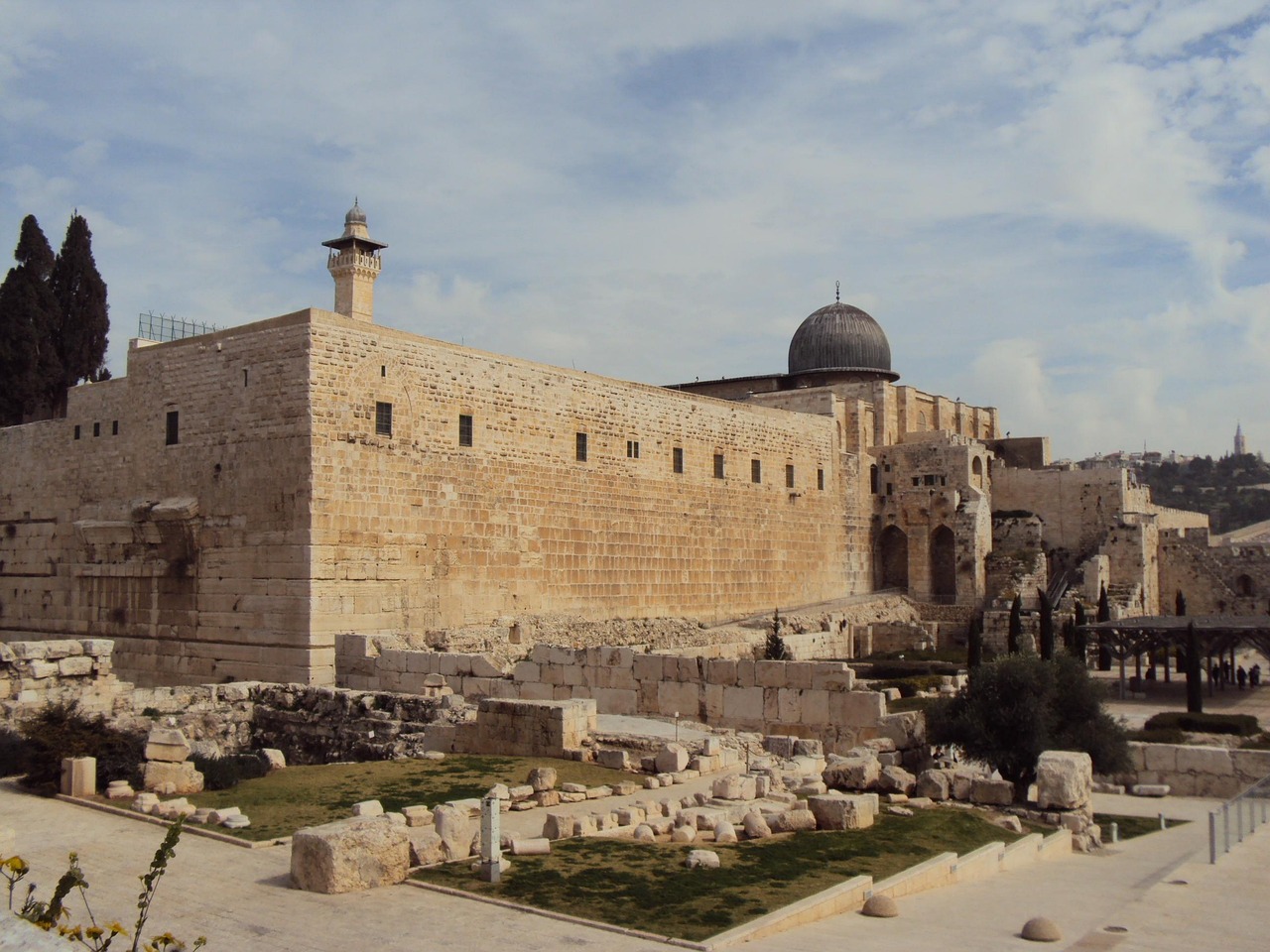
When their long journey in the wilderness came to an end, Yoosha AS brought the Bani Israel to Bayt al-Maqdis (Jerusalem), which they conquered, and Allah granted them victory. Regarding their entrance into this land, Allah SWT said,
And when We said, “Go into this township and eat freely of that which is therein, and enter the gate prostrate, and say, ‘Repentance.'” We will forgive you your sins and will increase (reward) the right-doers. But those who did wrong changed the word that had been told them for another saying, and We sent down upon the evil-doers wrath from heaven for their evil-doing.
The tafsir of this verse states that Allah SWT commanded them to say the word ‘Hittah,’ which means ‘Relieve us from our errors and sins,’ but instead they mocked this command and said the word ‘Hintah,’ which means ‘grain seed’ and, in Shariah, ‘barley.’
This rebellion and disobedience were the reasons Allah SWT released his anger and punishment upon them. The word for punishment used in verse is ‘Rijz,’ which is defined as a plague. After they entered the holy land, Yoosha AS divided the conquered lands among the twelve tribes. After his death, the leadership of Bani Israel was taken over by the judges.