
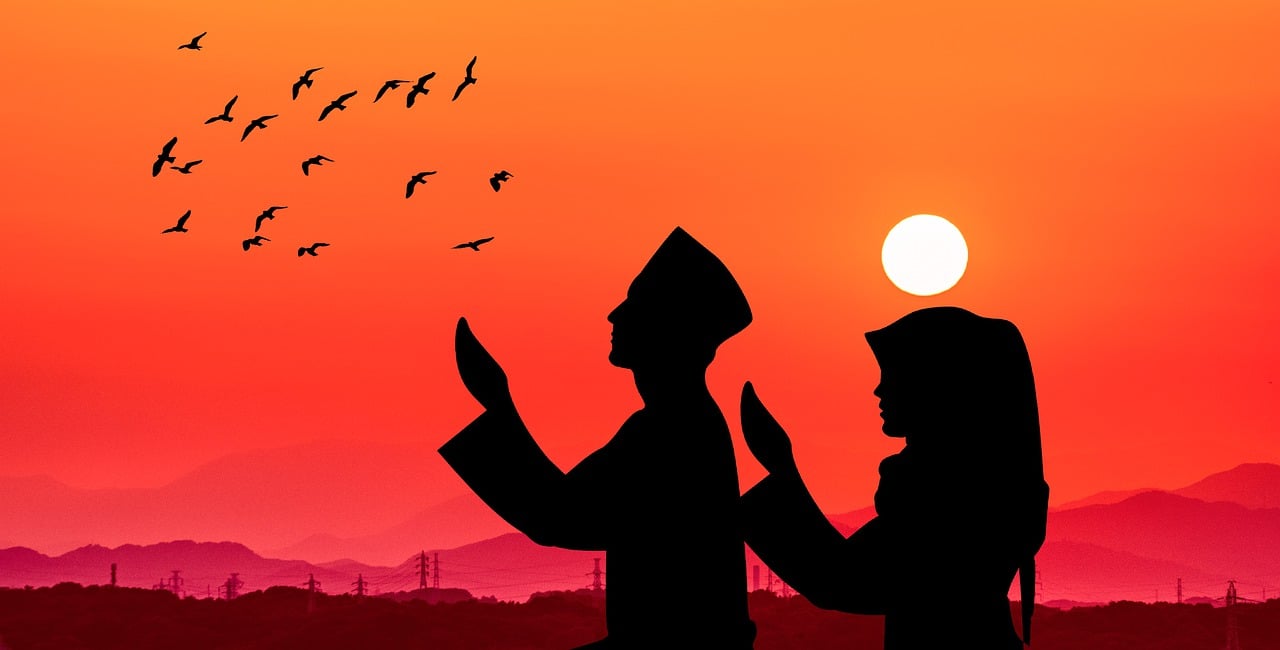
Prayer in Islam is one of the main pillars of the religion. It is an opportunity to connect with Allah SWT five times a day and forget all the worries of the world. It is also different for both men and women. There aren’t any differences in the recitation during the salah, but rather in the physical way one performs it. This blog will explore this difference and highlight the steps that differ in a woman’s salah.
Why the Different Positions?
Before exploring what the different steps are in a woman’s salah and what fiqhs (schools of thought) have it, it is essential to understand why these steps exist in the first place. The woman is not the same as a man. She is different, and this difference is one reason her prayer is slightly different from a man’s.
One of the great scholars of hadith, Imam Bayhaqi, said, “The distinguishing factor between the laws of prayer of men and women is that of concealment.” It is a command for a woman to do all the actions that are more concealing for her.”
There are numerous hadiths of the Prophet PBUH in which it is proven that a woman should offer her prayer in a concealing manner, i.e., a manner in which her body is concealed. It doesn’t matter whether she is at home or not; the way she prays remains the same.
To some women, this may feel like a burden, or they may feel like it is restricting them, but they should know that Allah is rewarding them for each second that they follow these rules.
The Prophet PBUH said, “Indeed, Allah looks at the women who conceals herself by putting her stomach to her sides and says to His angles, “Bear witness, O My Angles, that I have forgiven her.”
The Difference In Salah & The Difference Of Opinion
There is a difference of opinion among the four schools of thought regarding the way a Muslim woman should pray.
The Reasoning Of Those Who Say There Is No Difference
The schools of thought that say there is no difference base their opinion on the hadith of the Prophet PBUH, in which he said:
“You should pray in the way you have seen me praying.”
Scholars who hold this view state that this hadith includes everyone and doesn’t single out any gender. They also state that Islamic rulings apply to both genders unless there is evidence indicating that a ruling is specific to one gender.
Manner Of Praying
According to this opinion, the manner in which a woman prays is similar in terms of bowing, prostration, and recitation. Putting hands on the chest is best, and the same applies to placing them on the knees during ruku (bowing) and on the ground during sujood (prostration), in line with the ears or the shoulders. The same applies to straightening the back during ruku, and to rising from ruku or the first prostration.
The Reasoning Of Those Who Say There Is a Difference
As stated above, scholars who hold this view hold that women should conceal themselves during salah. This is why women shouldn’t spread their arms out or prostrate with their stomach on their thighs. This allows them to compress themselves. They also state that the leading female companions of the Prophet PBUH prayed differently from the male companions of the Prophet PBUH.
Manner Of Praying
- When starting her salah, a woman should raise her hands to her shoulders and keep them on her chest.
- When she goes into ruku, it is sufficient for her to bow only until her hands touch her shoulders, rather than males who have to keep their backs straight.
- When in sujood, her hands should be in line with her ears and close to them.
- When sitting between the two sajdas (the two prostrations) or tashahhud, she should sit on her left hip, moving the feet to the right and keeping them horizontally on the ground. Her right thigh should be on top of her left thigh.