
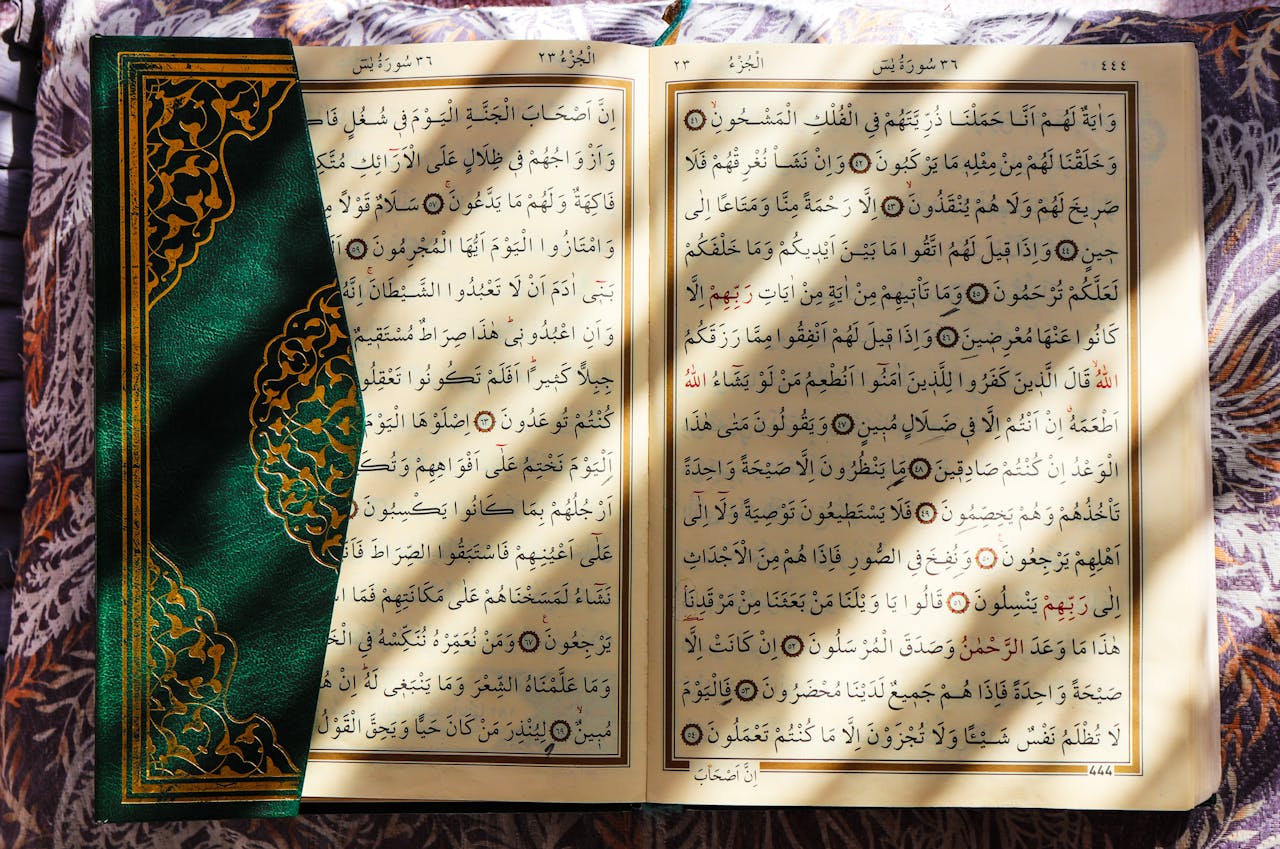
The Quran is a source of hope and peace for those who read it and reflect upon its meaning. Verses that provide calm to the anxious heart and words that ease the mind. Throughout the history of Islam, there are certain chapters and verses that a Muslim can turn to when facing difficulty. This blog will explore one of these verses, highlighting its message and what it truly means to turn towards the Quran in times of doubt and uncertainty.
Surah Yunus & The 94th Verse
Surah Yunus is the 10th chapter of the Quran, consisting of 109 verses. Although the surah is named after Prophet Yunus, it doesn’t detail his life or trials. Rather, the verses differ in their messages. Some discuss the Prophet Muhammad (PBUH), while others address the nature of humankind in worship. Some verses also provide reassurance to the reader in times of difficulty, and one of these is the 94th verse of Surah Yunus. However, before exploring why this verse can offer relief to a struggling Muslim, one should understand its message.
Verse 10:94: The Meaning & The Message
“And if thou (Muhammad) art in doubt concerning that which We reveal unto thee, then question those who read the Scripture (that was) before thee. Verily the Truth from thy Lord hath come unto thee. So be not thou of the waverers.”
There are many places in the Quran in which verses have directly addressed the Prophet PBUH, but in reality, they were addressed to the disbelievers or those who doubted the message of Islam. This verse is no different. When one takes a cursory glance at this ayah, it seems like Allah is telling the Prophet PBUH to turn to the Jews or Christians when he doubted the Quran. But in reality, this verse is indirectly talking to the disbelievers.
Further study of this ayah reveals that this indirect style was used by Allah SWT to prevent the disbelievers from receiving the guidance with indignation and defensiveness. It didn’t mean the Prophet PBUH faced any doubt concerning the revelations of the Quran. The wording meant that disbelievers who question the Quran’s guidance and stories should ask the people of the scripture, as most of the Quran’s verses are also in the Jewish and Christian books.
Such inquiries will confirm to them that the Quran was indeed right and the books they had received in the past had been distorted and tampered with. Even if they are told to ask the people of the scripture, they will eventually turn to Allah SWT and follow his guidance if Allah wills.
Doubt & Uncertainty In Light Of 10:94
At first glance, this verse seems like the one that informs the Muslims of Islam’s history and what transpired between the Prophet PBUH and the disbelievers during the dawah (call to Islam).
However, if one ponders over the meaning, they will find that this verse also directly addresses the Muslims in a way. The last sentence, “Verily, the truth from thy Lord has come unto thee. So be not thou of the waverers,” captures the essence of feeling doubt when it comes to the religion itself. And this feeling is in no way limited to disbelievers. Why? Because many Muslims feel the same way. They often doubt Islam and feel uncertain about the principles it has set. However, such behavior is not unusual. It is not an indicator of a person’s weak faith.
It just means that Shaytan is leading that person astray in their thinking. Casting doubt inside a Muslim’s heart is one of the biggest weapons of Shaytan. He constantly causes waswasa (bad thoughts), which makes one uneasy and significantly diminishes their desire to do good deeds.
A group of people came to the Prophet PBUH and said to him, “We have experienced such evil thoughts; we are too scared to even say them.” The Prophet (PBUH) replied, “Do you really experience what you say?” When they replied in the affirmative, the Prophet PBUH said, “That is a clear sign of faith.”
(Sahih Muslim, 1/119)
Turning to this verse during times of doubt and anxiety brings comfort to the heart. It reminds Muslims that, even in times of religious uncertainty, what they have is the truth. Islam didn’t come from a prophet or an angel; it came from Allah Himself, and that is the ultimate form of truth. It teaches Muslims to believe in what has been revealed to the messenger and to have full faith that their religion is the only truth among others.