
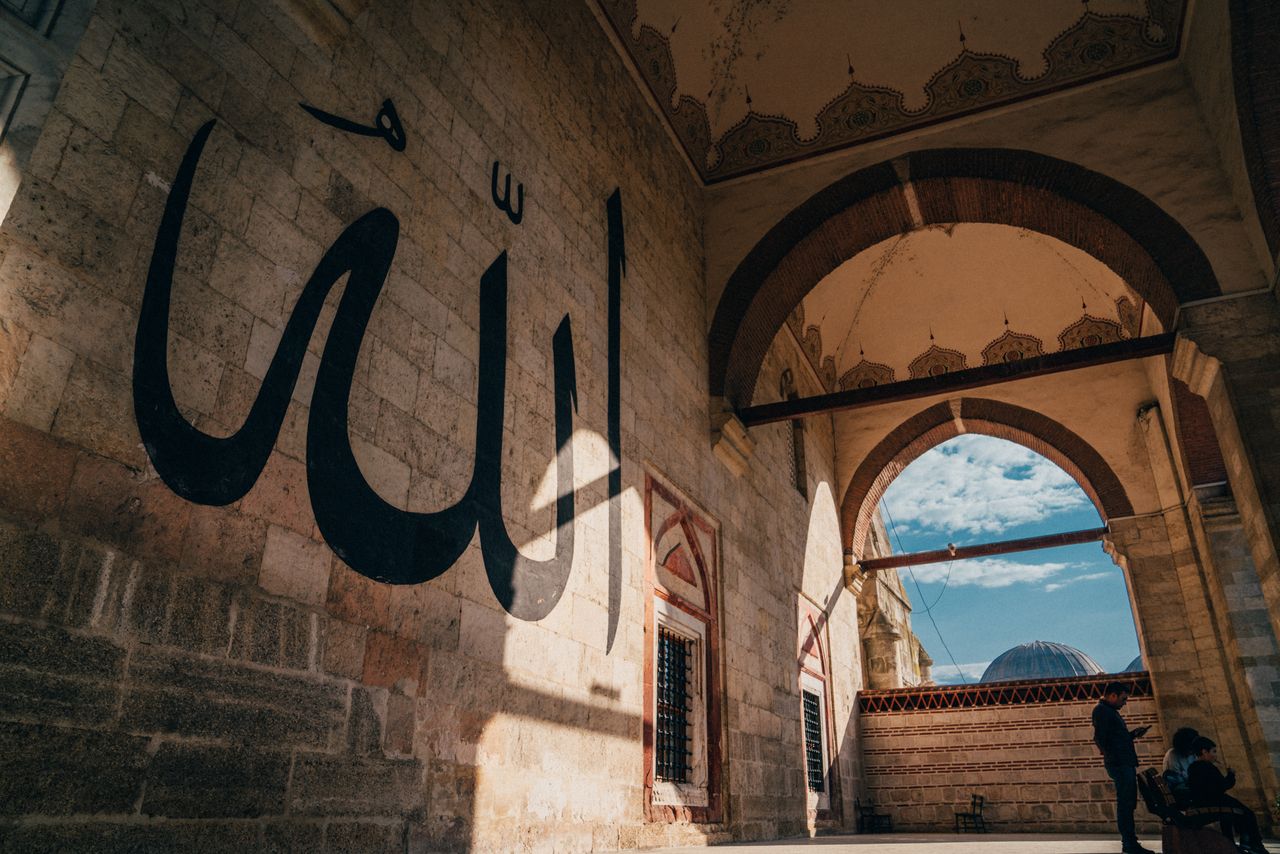
TL;DR
- Asma ul Husna means the Most Beautiful Names of Allah.
- Quran 7:180 says that the Most Beautiful Names belong to Allah and tells believers to call upon Him by them.
- Sahih al-Bukhari 7392 and Sahih Muslim 2677 confirm the special virtue connected with the 99 names.
- The Arabic word ahsaha includes the idea of counting or memorizing them. Scholars have also explained it as knowing, understanding, believing in, reflecting on, and living according to their meanings.
- The Sahih hadith does not contain a numbered list of the 99 names.
- Jami` at-Tirmidhi 3507 contains a list, but the enumeration is not established with the same strength as the basic 99-names hadith.
- Scholars generally do not understand the hadith to mean that Allah has only 99 names.
- Different printed lists therefore contain small differences in names and numbering.
- The best way to study Allah’s names is to learn their meanings, find their evidence in the Quran and Sunnah, reflect on them, and use established names when making dua.
- There is no sound evidence for assigning invented repetition counts or guaranteed worldly benefits to individual names.
The 99 Names of Allah are commonly called Asma ul Husna, meaning the Most Beautiful Names. They describe Allah through names of mercy, knowledge, power, forgiveness, wisdom, justice, majesty, and other perfect attributes.
An authentic hadith states that Allah has 99 names and that whoever memorizes them will enter Paradise. However, there is an important detail that many lists leave out: the authentic versions in Sahih al-Bukhari and Sahih Muslim give the number 99, but they do not provide the familiar numbered list of names. The longer narration that lists specific names is found in Jami` at-Tirmidhi 3507, and that enumeration has weakness in its chain.
What Are the 99 Names of Allah?
The Quran calls Allah’s names Al-Asma al-Husna, the Most Beautiful Names.
Surah Al-A’raf 7:180 says that the Most Beautiful Names belong to Allah and instructs believers to call upon Him through them.
The same idea appears elsewhere in the Quran. Surah Al-Isra 17:110 says that whether a person calls upon Allah or Ar-Rahman, the Most Beautiful Names belong to Him. Surah Taha 20:8 gives a similar teaching.
Several names also appear together near the end of Surah Al-Hashr 59:22-24, including:
- Al-Malik
- Al-Quddus
- As-Salam
- Al-Mu’min
- Al-Muhaymin
- Al-Aziz
- Al-Jabbar
- Al-Mutakabbir
- Al-Khaliq
- Al-Bari’
- Al-Musawwir
This shows that studying Allah’s names is rooted directly in the Quran.
The Authentic Hadith About the 99 Names
Abu Hurairah reported that Prophet Muhammad ﷺ said that Allah has 99 names, one hundred minus one, and whoever memorizes them will enter Paradise.
This narration appears in Sahih al-Bukhari 7392 and Sahih Muslim 2677.
The hadith is authentic.
The question is what ahsaha means.
What Does Ahsaha Mean?
The Arabic word used in the hadith is:
أحصاها
It is often translated as:
- Counts them
- Enumerates them
- Memorizes them
Sahih al-Bukhari’s wording is commonly translated as memorizing them by heart.
Scholars have also discussed a wider meaning.
They have explained ahsaha as including actions such as:
- Learning the names
- Memorizing them
- Understanding their meanings
- Believing in what they teach about Allah
- Reflecting on them
- Calling upon Allah through them
- Living in a way shaped by that knowledge
Egypt’s Dar al-Ifta summarizes several of these interpretations, including memorization, understanding, conviction, reflection, remembrance, and acting according to what the names teach.
This means memorization is valuable, but the purpose is deeper than being able to recite a list from memory.
For example, learning that Allah is Ar-Razzaq, the Provider, should strengthen trust in Him. Learning that He is At-Tawwab, the Acceptor of Repentance, should encourage a person to return to Him after sin.
Is the Familiar List of 99 Names Authentic?
This needs a careful answer.
The authentic hadith in Sahih al-Bukhari and Sahih Muslim gives the number 99 but does not list the individual names.
A longer narration in Jami` at-Tirmidhi 3507 does provide a list. Al-Tirmidhi himself described the narration as gharib and noted problems concerning narrations that enumerate the names. The Darussalam grading shown by Sunnah.com classifies this narration as Da’if.
Hadith scholars have therefore distinguished between:
- The authentic statement that there are 99 names with a special virtue
- The specific transmitted enumeration of those names
The first is firmly established.
The second has scholarly discussion.
That explains why you may find slightly different 99-name lists in books, posters, websites, and apps.
Why Do Some Lists Start With Ar-Rahman and Others With Allah?
The enumeration reported in Jami` at-Tirmidhi begins with Allah and then continues with Ar-Rahman, Ar-Rahim, and the other names.
Many modern educational lists instead start:
- Ar-Rahman
- Ar-Rahim
- Al-Malik
They often add Al-Ahad later in the list.
Neither numbering format should be described as a numbered list whose exact order was certainly taught by the Prophet ﷺ, because the Sahih hadith itself does not provide such an enumeration.
For clarity, the table below follows the names as they appear in the well-known enumeration reported in Jami` at-Tirmidhi 3507, beginning with Allah. The English meanings are short explanations rather than complete definitions.
99 Names of Allah with Arabic and English Meanings
| # | Arabic | Name | Simple Meaning |
|---|---|---|---|
| 1 | الله | Allah | Allah, the proper name of God |
| 2 | الرحمن | Ar-Rahman | The Universally Merciful |
| 3 | الرحيم | Ar-Rahim | The Especially Merciful |
| 4 | الملك | Al-Malik | The King |
| 5 | القدوس | Al-Quddus | The Most Holy |
| 6 | السلام | As-Salam | The Source of Peace |
| 7 | المؤمن | Al-Mu’min | The Giver of Security |
| 8 | المهيمن | Al-Muhaymin | The Guardian |
| 9 | العزيز | Al-Aziz | The Almighty |
| 10 | الجبار | Al-Jabbar | The Compeller |
| 11 | المتكبر | Al-Mutakabbir | The Supremely Great |
| 12 | الخالق | Al-Khaliq | The Creator |
| 13 | البارئ | Al-Bari’ | The Originator |
| 14 | المصور | Al-Musawwir | The Fashioner |
| 15 | الغفار | Al-Ghaffar | The Ever-Forgiving |
| 16 | القهار | Al-Qahhar | The All-Subduing |
| 17 | الوهاب | Al-Wahhab | The Bestower |
| 18 | الرزاق | Ar-Razzaq | The Provider |
| 19 | الفتاح | Al-Fattah | The Opener |
| 20 | العليم | Al-Alim | The All-Knowing |
| 21 | القابض | Al-Qabid | The Withholder |
| 22 | الباسط | Al-Basit | The Expander |
| 23 | الخافض | Al-Khafid | The Abaser |
| 24 | الرافع | Ar-Rafi’ | The Exalter |
| 25 | المعز | Al-Mu’izz | The Giver of Honor |
| 26 | المذل | Al-Mudhill | The One Who Humbles |
| 27 | السميع | As-Sami’ | The All-Hearing |
| 28 | البصير | Al-Basir | The All-Seeing |
| 29 | الحكم | Al-Hakam | The Judge |
| 30 | العدل | Al-Adl | The Just |
| 31 | اللطيف | Al-Latif | The Subtle and Kind |
| 32 | الخبير | Al-Khabir | The All-Aware |
| 33 | الحليم | Al-Halim | The Forbearing |
| 34 | العظيم | Al-Azim | The Magnificent |
| 35 | الغفور | Al-Ghafur | The Great Forgiver |
| 36 | الشكور | Ash-Shakur | The Appreciative |
| 37 | العلي | Al-Aliyy | The Most High |
| 38 | الكبير | Al-Kabir | The Most Great |
| 39 | الحفيظ | Al-Hafiz | The Preserver |
| 40 | المقيت | Al-Muqit | The Sustainer |
| 41 | الحسيب | Al-Hasib | The Reckoner |
| 42 | الجليل | Al-Jalil | The Majestic |
| 43 | الكريم | Al-Karim | The Generous |
| 44 | الرقيب | Ar-Raqib | The Watchful |
| 45 | المجيب | Al-Mujib | The Responder |
| 46 | الواسع | Al-Wasi’ | The All-Encompassing |
| 47 | الحكيم | Al-Hakim | The All-Wise |
| 48 | الودود | Al-Wadud | The Loving |
| 49 | المجيد | Al-Majid | The Glorious |
| 50 | الباعث | Al-Ba’ith | The Resurrector |
| 51 | الشهيد | Ash-Shahid | The Witness |
| 52 | الحق | Al-Haqq | The Truth |
| 53 | الوكيل | Al-Wakil | The Trustee |
| 54 | القوي | Al-Qawiyy | The All-Strong |
| 55 | المتين | Al-Matin | The Firm |
| 56 | الولي | Al-Waliyy | The Protecting Ally |
| 57 | الحميد | Al-Hamid | The Praiseworthy |
| 58 | المحصي | Al-Muhsi | The One Who Counts All |
| 59 | المبدئ | Al-Mubdi’ | The Originator |
| 60 | المعيد | Al-Mu’id | The Restorer |
| 61 | المحيي | Al-Muhyi | The Giver of Life |
| 62 | المميت | Al-Mumit | The Giver of Death |
| 63 | الحي | Al-Hayy | The Ever-Living |
| 64 | القيوم | Al-Qayyum | The Self-Sustaining |
| 65 | الواجد | Al-Wajid | The One Who Finds |
| 66 | الماجد | Al-Maajid | The Illustrious |
| 67 | الواحد | Al-Wahid | The One |
| 68 | الصمد | As-Samad | The Self-Sufficient Master |
| 69 | القادر | Al-Qadir | The Able |
| 70 | المقتدر | Al-Muqtadir | The All-Powerful |
| 71 | المقدم | Al-Muqaddim | The One Who Brings Forward |
| 72 | المؤخر | Al-Mu’akhkhir | The One Who Delays |
| 73 | الأول | Al-Awwal | The First |
| 74 | الآخر | Al-Akhir | The Last |
| 75 | الظاهر | Az-Zahir | The Manifest |
| 76 | الباطن | Al-Batin | The Hidden |
| 77 | الوالي | Al-Wali | The Governor |
| 78 | المتعالي | Al-Muta’ali | The Most Exalted |
| 79 | البر | Al-Barr | The Source of Goodness |
| 80 | التواب | At-Tawwab | The Acceptor of Repentance |
| 81 | المنتقم | Al-Muntaqim | The Avenger |
| 82 | العفو | Al-Afuww | The Pardoner |
| 83 | الرؤوف | Ar-Ra’uf | The Most Kind |
| 84 | مالك الملك | Malik al-Mulk | Owner of All Sovereignty |
| 85 | ذو الجلال والإكرام | Dhul-Jalali wal-Ikram | Possessor of Majesty and Honor |
| 86 | المقسط | Al-Muqsit | The Equitable |
| 87 | الجامع | Al-Jami’ | The Gatherer |
| 88 | الغني | Al-Ghaniyy | The Self-Sufficient |
| 89 | المغني | Al-Mughni | The Enricher |
| 90 | المانع | Al-Mani’ | The Preventer |
| 91 | الضار | Ad-Darr | The One in Whose Decree Harm Occurs |
| 92 | النافع | An-Nafi’ | The Giver of Benefit |
| 93 | النور | An-Nur | The Light |
| 94 | الهادي | Al-Hadi | The Guide |
| 95 | البديع | Al-Badi’ | The Incomparable Originator |
| 96 | الباقي | Al-Baqi | The Everlasting |
| 97 | الوارث | Al-Warith | The Inheritor |
| 98 | الرشيد | Ar-Rashid | The Guide to the Right Way |
| 99 | الصبور | As-Sabur | The Most Patient |
Because the exact enumeration is a matter of scholarly study, this table should be used as a learning aid rather than as a claim that every name and number above forms an undisputed Prophetic list.
Does Allah Have Only 99 Names?
Most scholars say no.
The hadith does not necessarily mean that 99 is the total number of Allah’s names. Rather, it gives a special virtue connected with 99 names.
Imam Al-Nawawi and other scholars are cited as holding that Allah’s names are not restricted to this number.
A well-known supplication reported from Abdullah ibn Mas’ud also asks Allah by every name that He has named Himself with, revealed in His Book, taught to someone in His creation, or kept with Himself in the knowledge of the unseen. Scholars have used this wording as evidence that there are names unknown to human beings. The grading of individual routes of this narration has some scholarly discussion, although a number of hadith scholars accepted it.
A useful way to understand the 99-names hadith is:
Allah has 99 names with this particular virtue.
It does not necessarily mean:
Allah possesses exactly 99 names and no others.
Important Names of Allah Found Clearly in the Quran
Many of Allah’s best-known names occur directly in Quranic verses.
Ar-Rahman and Ar-Rahim
Both names appear at the beginning of Surah Al-Fatihah.
They come from the Arabic root connected with mercy.
Ar-Rahman points to Allah’s vast and immense mercy, while Ar-Rahim also expresses His continuing mercy.
Al-Hayy and Al-Qayyum
Ayat ul Kursi, Surah Al-Baqarah 2:255, calls Allah:
Al-Hayy, Al-Qayyum
These names are commonly translated as:
- Al-Hayy: The Ever-Living
- Al-Qayyum: The Self-Sustaining One who sustains creation
They also appear together in Surah Ali ‘Imran 3:2.
Al-Awwal and Al-Akhir
Surah Al-Hadid 57:3 calls Allah:
- Al-Awwal, the First
- Al-Akhir, the Last
- Az-Zahir
- Al-Batin
These four names appear together in one verse.
Ar-Razzaq
Surah Adh-Dhariyat 51:58 calls Allah Ar-Razzaq, the Provider, and describes Him as possessing strength.
Al-Ahad and As-Samad
Surah Al-Ikhlas 112:1-2 contains two especially important descriptions:
- Al-Ahad: The One
- As-Samad: The One upon whom all depend
Al-Ahad is a clear Quranic name even though it does not appear in the particular enumeration transmitted in Tirmidhi 3507. This is one reason scholars compiling Allah’s names from the Quran and authentic Sunnah may produce lists that differ from the familiar poster version.
Names of Allah Grouped by Meaning
Learning the names by theme can make them easier to understand.
Names of Mercy and Forgiveness
Examples include:
- Ar-Rahman
- Ar-Rahim
- Al-Ghaffar
- Al-Ghafur
- At-Tawwab
- Al-Afuww
- Ar-Ra’uf
- Al-Halim
These names remind believers that Allah’s mercy, forgiveness, patience, and acceptance of repentance are central themes in Islam.
Names of Power and Majesty
Examples include:
- Al-Malik
- Al-Aziz
- Al-Jabbar
- Al-Qahhar
- Al-Aliyy
- Al-Kabir
- Al-Qadir
- Al-Muqtadir
- Malik al-Mulk
- Dhul-Jalali wal-Ikram
They remind a believer that all true authority and power ultimately belong to Allah.
Names of Knowledge and Awareness
Examples include:
- Al-Alim
- As-Sami’
- Al-Basir
- Al-Khabir
- Ar-Raqib
- Ash-Shahid
These names teach that nothing is hidden from Allah.
Names Connected With Provision and Generosity
Examples include:
- Al-Wahhab
- Ar-Razzaq
- Al-Karim
- Al-Wasi’
- Al-Ghaniyy
- Al-Mughni
They encourage Muslims to recognize Allah as the ultimate source of provision and blessing.
Names Connected With Guidance
Examples include:
- Al-Hakim
- Al-Hadi
- Al-Haqq
- Al-Wakil
These names can help a Muslim reflect on Allah’s truth, wisdom, guidance, and care.
How to Use the Names of Allah in Dua
The Quran gives direct guidance on this.
Surah Al-A’raf 7:180 says:
To Allah belong the Most Beautiful Names, so call upon Him by them.
This means a person can choose a name that matches what they are asking Allah for.
For example:
For mercy:
“Ya Rahman, have mercy on me and my family.”
For forgiveness:
“Ya Ghafur, forgive my sins.”
For provision:
“Ya Razzaq, provide me with lawful and beneficial provision.”
For guidance:
“Ya Hadi, guide me to what is right.”
When seeking repentance:
“Ya Tawwab, accept my repentance.”
The purpose is not to treat the name like a magical formula. The believer is calling upon Allah while understanding something about the name being used.
Are There Special Benefits for Reciting Individual Names?
There is a very important difference between a general spiritual benefit and a specific promised religious reward.
Learning Allah’s names, remembering Him, making dua through His names, and reflecting on their meanings are all valuable.
The authentic hadith also gives the special promise connected with ahsaha of the 99 names.
However, many charts and social media posts make claims such as:
- Repeat a particular name 100 times to become wealthy.
- Repeat one name a fixed number of times to get married.
- Recite another name for a guaranteed pregnancy.
- Write a certain name to protect a house from every problem.
- Repeat a name a specific number of times for guaranteed business success.
Claims like these need evidence.
A fixed religious practice involving a specific number, time, and guaranteed reward should not be attributed to Islam without a reliable Quranic, hadith, or recognized scholarly basis.
What Is Established vs. What Needs Evidence?
| Claim | Evidence Status |
|---|---|
| Allah has 99 names with a special virtue | Authentic hadith |
| Whoever ahsaha enters Paradise | Authentic hadith |
| Muslims should call upon Allah through His beautiful names | Quran 7:180 |
| Learning and understanding the names is valuable | Supported by the Quran, hadith, and scholarship |
| The familiar poster list is the exact Sahih Prophetic enumeration | Not established |
| Allah has only 99 names | The majority scholarly view says no |
| Every name has a fixed repetition count | Requires evidence |
| A particular name guarantees wealth, marriage, pregnancy, or success | No general authentic basis |
| A person may make dua using an established name appropriate to the request | Supported by Quran 7:180 |
A Simple 99-Day Plan to Learn the Names
A one-name-a-day plan makes the subject easier to manage.
For each day:
- Read the name in Arabic.
- Practice the pronunciation.
- Learn its basic meaning.
- Find where that name or description is established in the Quran or authentic Sunnah.
- Think about what it teaches you about Allah.
- Use the name naturally in dua when appropriate.
- Review earlier names before learning the next one.
Review Every Seven Days
After every seven names, spend one day reviewing the previous group.
Ask yourself:
- Can I recognize the Arabic?
- Can I pronounce the name?
- Do I know its meaning?
- Do I remember a Quranic or hadith source?
- Can I explain what the name teaches about Allah?
- Can I use it correctly in dua?
This takes the study beyond simple memorization.
Do You Need to Memorize All 99 in Order?
There is no authentic evidence requiring Muslims to memorize the names in the order found on a modern poster or website.
That is especially important because the Sahih hadith does not provide a numbered sequence.
You can therefore learn them:
- In the commonly printed order
- By theme
- In the order you find them in the Quran
- A few names at a time
The goal is to know Allah better, not simply to memorize numbering.
Can Children Learn the 99 Names?
Yes.
Children can begin with simple and frequently used names such as:
- Allah
- Ar-Rahman
- Ar-Rahim
- Al-Khaliq
- Ar-Razzaq
- Al-Alim
- As-Sami’
- Al-Basir
- Al-Ghafur
- Al-Hayy
Rather than asking a child to memorize 99 names with no context, explain each name with a simple example.
For Al-Khaliq, discuss creation.
For Ar-Razzaq, discuss food and provision.
For As-Sami’, explain that Allah hears every sincere dua.
This makes memorization more meaningful.
Conclusion
The 99 Names of Allah are a way to learn about the One Muslims worship.
The authentic hadith in Sahih al-Bukhari and Sahih Muslim confirms a special virtue for the person who ahsaha the 99 names. Quran 7:180 also tells believers to call upon Allah through His Most Beautiful Names.
At the same time, accuracy matters. The Sahih hadith does not provide the familiar numbered list, scholars generally hold that Allah has more than 99 names, and the detailed enumeration found in Tirmidhi has a weaker chain.
For that reason, the most useful approach is not simply to memorize a poster. Learn the names that are established in the Quran and Sunnah, understand what they mean, reflect on them, and use them to deepen your worship and dua
Frequently Asked Questions
Asma ul Husna means the Most Beautiful Names.
The phrase comes from the Quran, including Surah Al-A’raf 7:180, which says that the Most Beautiful Names belong to Allah.
The authentic hadith gives a special virtue connected with 99 names, but most scholars do not understand this as limiting Allah’s names to only 99.
No.
Sahih al-Bukhari 7392 confirms that Allah has 99 names and gives the reward for ahsaha, but it does not enumerate the names individually.
No.
Sahih Muslim 2677 also confirms the number and the reward but does not provide the familiar 99-name list.
One famous enumeration appears in Jami` at-Tirmidhi 3507.
However, the detailed list is not authenticated at the same level as the basic hadith in Bukhari and Muslim. The narration is graded Da’if in the Darussalam grading displayed by Sunnah.com.
Because the authentic hadith does not provide one numbered list.
Scholars have gathered Allah’s names from the Quran and Sunnah using slightly different methods, which can produce differences in individual names and numbering.
The enumeration reported in Jami` at-Tirmidhi 3507 begins with Allah.
Many popular modern lists instead begin with Ar-Rahman and add another Quranic name such as Al-Ahad.
Because the Sahih narration does not enumerate the 99, the numbering itself should not be treated as an article of faith.
Allah is the proper divine name used throughout the Quran.
Scholars have also discussed the concept of Al-Ism al-A’zam, the Greatest Name of Allah, based on several hadith. They have differed over exactly which name or phrase it refers to. It is therefore better not to state one answer as undisputed.
Many are clearly found in the Quran, but the familiar list is not presented as one complete Quranic list.
Some names are established through authentic Sunnah, while scholars also differ over whether certain descriptive words in the Quran should be counted as formal names.
The closing verses of Surah Al-Hashr 59:22-24 contain a well-known group of Allah’s names, including Al-Malik, Al-Quddus, As-Salam, Al-Mu’min, Al-Muhaymin, Al-Aziz, Al-Jabbar, Al-Mutakabbir, Al-Khaliq, Al-Bari’, and Al-Musawwir.
Yes, remembering and learning Allah’s names is good.
However, if someone assigns a special fixed repetition count and claims a guaranteed reward or worldly result, that specific claim requires reliable evidence.
The authentic hadith gives a great promise to the person who ahsaha.
Memorization is one important meaning of the word, and Sahih al-Bukhari explicitly connects it with remembering the names. Scholars have also explained ahsaha more broadly to include understanding, believing, reflecting, and acting according to what the names teach.
It should therefore not be treated as a mechanical formula disconnected from faith and worship.
They are commonly called:
اسماء الحسنیٰ
This means:
اللہ تعالیٰ کے بہترین اور خوبصورت نام
The Arabic phrase itself is the same, although individual English and Urdu translations may vary because each divine name can carry more meaning than one translated word.