
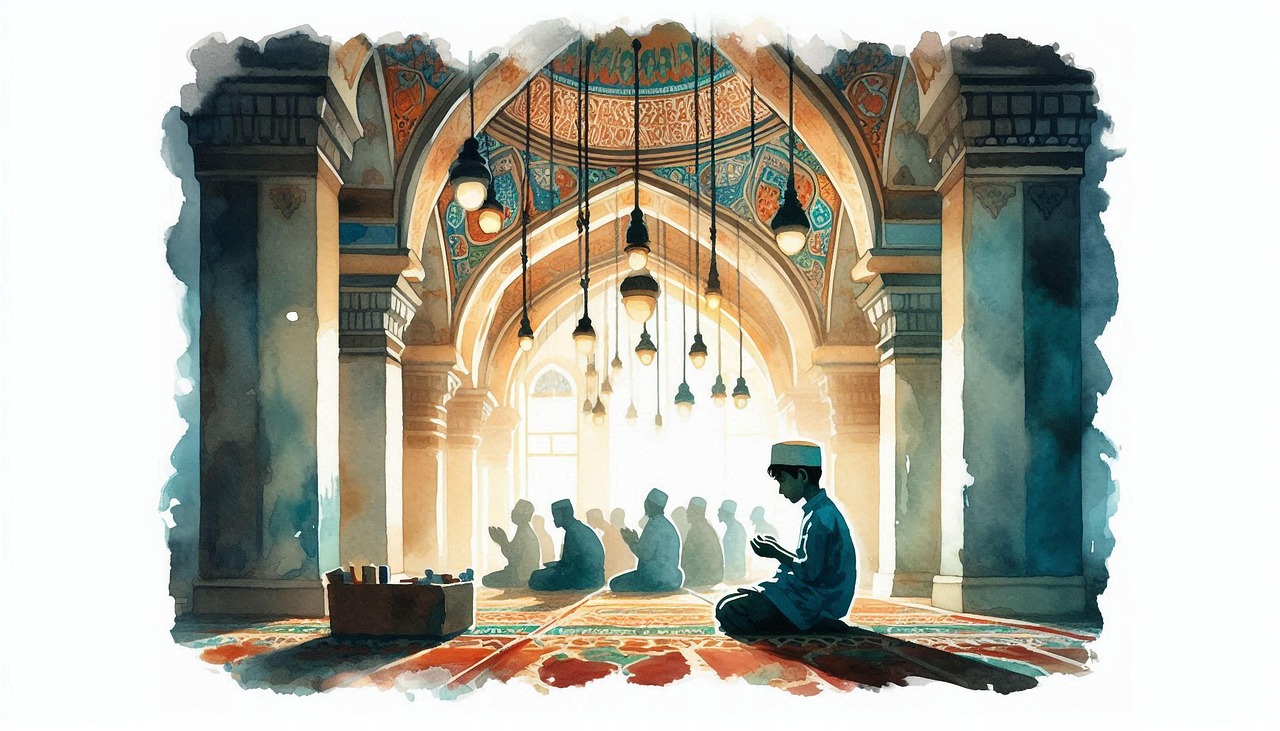
Prayer (salah) in Islam is the second pillar of the religion. It protects Muslims from various harms by strengthening their relationship with their faith and provides them with a way to grow closer to their lord.
“Recite that which has been inspired by the Scripture (the Quran) and establish prayer. Lo! Prayer preserves from lewdness and iniquity, but verily remembrance of Allah is more important. And Allah knows what you do.”
Islam has divided all prayers into four categories based on the degree of obligation and the reward a Muslim receives for performing them. These categories include Fard, Wajib, Sunnah, and Nafl. This blog will explore the Nafl prayers in detail, highlighting the virtues a Muslim gains from performing them and what the Prophet PBUH has stated about these prayers in his hadith.
Nafl Prayer: The Meaning
The word “Nafl” is an Arabic term meaning “something extra” or “additional.” In the context of salah, this word has two meanings. It can refer to the supererogatory prayers, such as tahajjud, or to the cycles in a salah (rakat), which are voluntary. Both of the above are proven from the Sunnah. If a Muslim performs them, they will be given a great reward, but if they don’t, there is no sin on them.
Prayers Which Include Nafl
Of the five prayers, three include the nafl rakat. These prayers are Zuhr, Maghrib, and Isha. Below is the breakdown of the complete nafl prayers included in each.
Zuhr: Includes 2 rakat of nafl.
Maghrib: Includes 2 rakat of nafl.
Isha: Includes 4 nafl in total; prayed in 2 rakats.
Note: All prayers, including nafl, are to be prayed in cycles of 2. It is not permissible to increase or decrease this number.
Prayers Which Are Nafl
Islam has several prayers that are regarded as nafl (voluntary). And unlike the five prayers that Muslims perform every day, most of these prayers are performed for a certain purpose, such as asking Allah for His forgiveness. Below is a list of the prayers considered voluntary in Islam.
Tahajjud Prayer
The Tahajjud prayer is one of the most blessed nafl prayers. It has numerous virtues, all of which the Prophet PBUH has mentioned in his hadiths. The time of this prayer begins when the Isha adhan is given and lasts until the time of Fajr begins. Although one can pray Tahajjud at any time in the night, it is highly preferred to pray it in the last third of the night because this is when Allah SWT descends to the last heaven.
Allah comes down every night to the lowest heaven when one-third of the early part of the night has passed and says that He is the Lord; He is the Lord. Who is there to pray to him so that He may answer him? Who is there to beg him so that he may grant it? Who is there to beg for forgiveness so that He may forgive him? And he continues like this until the day breaks. (i.e., dawn arrives)
Ishraq & Duha Prayer
The Ishraq prayer and the Duha prayer are both performed after the Fajr prayer when the sun has risen. Both of these prayers are proven from the sunnah. However, there is disagreement among scholars over whether they constitute different prayers or a single prayer. This difference of opinion stems from the hadiths, which present two possibilities.
“When the sun reached the same height in the west as it reaches in the east at the time of Asr, he would offer a prayer of two rakats. And when the sun reached the same height in the west as it reaches in the east at the time of Zuhr, he would offer four rakahs.”
However, a majority of jurists hold that both prayers are the same. They state that the above hadith states the time at which this prayer should be prayed. One is the “optimal” time to pray it, right after sunset, and the other is the “permissible” time, anytime before noon. However, if a person offers both of these prayers separately, that will also be valid. The minimum cycles (rakats) are 2, and the maximum is 8.
Note: The number of rakat and the time may vary across the four fiqh (schools of thought). Therefore, it is necessary to check what the ruling in one’s fiqh is before offering any prayer.
Salat al-Awwabin (The Prayer of the Righteous)
Salat al-Awwabin is another nafl prayer offered between Maghrib and Isha. This view is held by several scholars on the basis of various chains of narration. These chains are individually weak, but when combined, they hold weight, especially with regard to virtuous actions.
“When a Muslim prays six rakahs after Maghrib and doesn’t say anything bad in between them, they will have a reward that is equal to the worship of twelve years.”
Furthermore, it is reported in various sound narrations that the Prophet PBUH used to pray between Maghrib and Isha. Salat al-Awwabin is prayed in cycles of two and four. The minimum number of rakats for this prayer is two, and the maximum is twenty.
Salat al-Tawbah
Also known as the ‘Prayer of Repentance,‘ this prayer is performed when a Muslim seeks forgiveness from Allah SWT.
The Prophet PBUH said, “Allah will forgive every person who, after committing a sin, gets up and purifies themselves, then prays asking for forgiveness.”
It is preferred to offer this prayer as soon as one commits a sin, but even if offered later, it is valid.
Tahiyyatul Wudu
Tahiyyatul Wudu means ‘Greeting of Ablution’ and is a prayer performed directly after one has done their wudu. Many scholars affirm that offering Tahiyyatul Wudu is mustahabb, and its virtues are mentioned in several hadiths. This prayer is offered in two rakats.
The Prophet PBUH said, “Whoever performs wudu and performs it perfectly and then offers two rakahs of prayer in a way where he doesn’t forget anything in between it, all of their past sins will be forgiven.”
Tahiyyatul Masjid
Tahiyyatul Masjid, ‘Greeting the Mosque,’ is a prayer performed when one enters a mosque. The Prophet PBUH said,
“When any Muslim enters a masjid, they should pray two rakats before sitting down.”
It is a proven practice from the Prophet PBUH, and the scholars regard it as mustahabb and say that it is makruh to sit down without performing this performance with no excuse because of the hadith. It is prayed in two rakats, as stated in the hadith.
Salat al-Istikhara
Salat al-Istikhara is a prayer offered to seek Allah’s help in making a decision. This decision could be regarding anything in a Muslim’s life, such as marriage, career, finance, etc. This prayer is also prayed in two rakats.
“The Prophet PBUH used to teach the Istikhara prayer for every matter just as he would teach the verses of the Holy Quran.”