
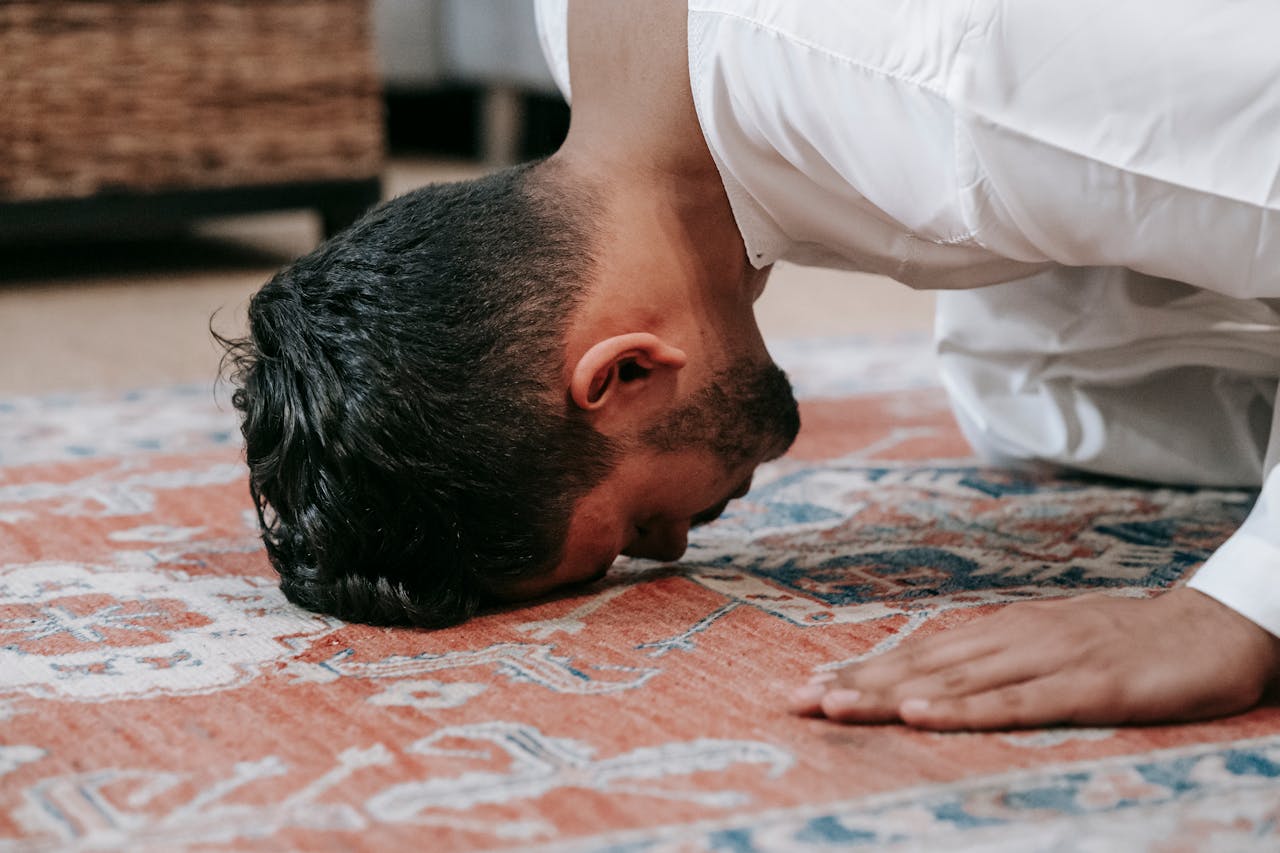
Prayer is an essential part of Islam. It is the second pillar of the religion, and according to the Prophet PBUH, it is the differentiator between the believers and the disbelievers. Salah is not only an obligation for Muslims but also a chance to connect with their lord five times a day. It is an act that enables them to put aside their worldly worries and focus on their creator.
The Messenger of Allah (PBUH) said, “Our performance of salah is the thing that differentiates us from the disbelievers and the hypocrites. The one who abandons their salah has become a disbeliever.”
Islam has divided all prayers into four categories based on the degree of obligation and the reward a Muslim receives for performing them. These categories include Fard, Wajib, Sunnah, and Nafl. This blog will explore the Sunnah prayer in detail, highlighting the virtues a Muslim gains from performing it and the Prophet PBUH’s statements on these prayers in his hadith.
Sunnah Prayer: The Meaning
“Sunnah” is an Arabic word that translates to “tradition” or “way.” However, in the context of prayer, this word can either refer to the sunnah (voluntary) cycles in a salah (rakat), or it can also refer to the prayers that the Prophet PBUH prayed throughout his life apart from the five obligatory prayers and the prayers that are proven from the hadiths, such as tahajjud.
Sunnah & Nafl Prayers: Are They The Same?
The sunnah prayers, not the cycles in salah, but the separate sunnah prayers like the Duha prayer, the Istikhara prayer, and Salat al-Awwabin, are called as such because they were performed by the Prophet PBUH in his life. And all the actions that he had done in his life are called a sunnah because it was the ‘way’ of the Prophet.
However, they are essentially nafl prayers because of their nature (i.e., if a person performs them, they will receive a great reward, but if they don’t, there is no sin on them) and the reward one receives for praying them. They are called sunnah because the Prophet PBUH prayed them, but they are nafl because of their degree of obligation and reward. Therefore, if someone calls tahajjud a sunnah prayer, it means it is proven from the Prophet PBUH; if they call it a nafl prayer, it means the prayer is voluntary, and the reward differs from that for praying the sunnah rakats (voluntary cycles of prayer).
Note: Whether leaving sunnah prayers is sinful or not is an issue that may vary across the four fiqhs (schools of thought). Therefore, it is necessary to check the rulings within one’s own fiqh before making any decisions.
Prayers Which Include Sunnah Rakat
There are five obligatory prayers in Islam, and all five include the sunnah rakats. Below is the complete breakdown:
Fajr: Includes two sunnah rakats.
Zuhr: Includes six sunnah rakats, prayed as 4 rakats then 2 rakats.
Asr: Includes four sunnah rakats.
Maghrib: Includes two sunnah rakats.
Isha: Includes six sunnah rakats, prayed as 4 rakats then 2 rakats.
Rules Regarding Praying The Sunnah Rakat
Islam has certain guidelines for every form of worship to ensure it is carried out to the best possible degree. Similarly, there are certain guidelines surrounding praying the sunnah rakat that assist Muslims in performing their prayers in a way most beloved to Allah.
- Sunnah rakats should be prayed with their respective prayers. It is not permissible to pray the rakats of one prayer at the time of another. For example, if one prays the 2 rakats of maghrib at the time of Isha, it won’t be valid.
- If one is running out of time for a prayer, the fard rakat should be prayed first because its degree of obligation is higher than that of the sunnah rakat. For example, in Zuhr, there are 4 sunnah rakats that come before the fard, but if time is limited, priority should be given to the fard rakats.
- All sunnah rakats are to be prayed exactly as prescribed. It is not permissible to either increase or decrease this number.
Virtues Of Praying The Sunnah Rakat
The Prophet PBUH has mentioned in several hadiths the reward for praying the sunnah rakats, such as,
Aisha RA narrated that the Prophet PBUH said, “Whoever regularly performs the twelve sunnah rakats, Allah will build them a house in Paradise.”
Ibn Umar narrated, “The Messenger of Allah (PBUH) said, ‘May Allah have mercy upon the one who prays four rakat sunnah before the prayer of Asr.'”
The wording ‘before the prayer of Asr’ refers to the four fard rakats of Asr. They don’t point to the sunnah rak’at as a separate part from the prayer of Asr.
Prayers Which Are Sunnah
There are many prayers the Prophet PBUH used to pray apart from the daily five. And unlike the five obligatory prayers, these prayers are mostly performed for a specific purpose, whether to ask Allah’s help or to seek forgiveness. Such as:
Salat al-Istikhara
Salat al-Istikhara is a prayer offered to seek Allah’s help in making a decision. This decision could be regarding anything in a Muslim’s life, such as marriage, career, finance, etc. This prayer is also prayed in two rakats.
“The Prophet PBUH used to teach the Istikhara prayer for every matter just as he would teach the verses of the Holy Quran.”
Tahajjud Prayer
The Tahajjud prayer is one of the most blessed nafl prayers. It has numerous virtues, all of which the Prophet PBUH has mentioned in his hadiths. The time of this prayer begins when the Isha adhan is given and lasts until the time of Fajr begins. Although one can pray Tahajjud at any time in the night, it is highly preferred to pray it in the last third of the night because this is when Allah SWT descends to the last heaven.
Allah comes down every night to the lowest heaven when one-third of the early part of the night has passed and says that He is the Lord; He is the Lord. Who is there to pray to him so that He may answer him? Who is there to beg him so that he may grant it? Who is there to beg for forgiveness so that He may forgive him? And he continues like this until the day breaks. (i.e., dawn arrives)
Tahiyyatul Wudu
Tahiyyatul Wudu means ‘Greeting of Ablution’ and is a prayer performed directly after one has done their wudu. Many scholars affirm that offering Tahiyyatul Wudu is mustahabb, and its virtues are mentioned in several hadiths. This prayer is offered in two rakats.
The Prophet PBUH said, “Whoever performs wudu and performs it perfectly and then offers two rakahs of prayer in a way where he doesn’t forget anything in between it, all of their past sins will be forgiven.”