
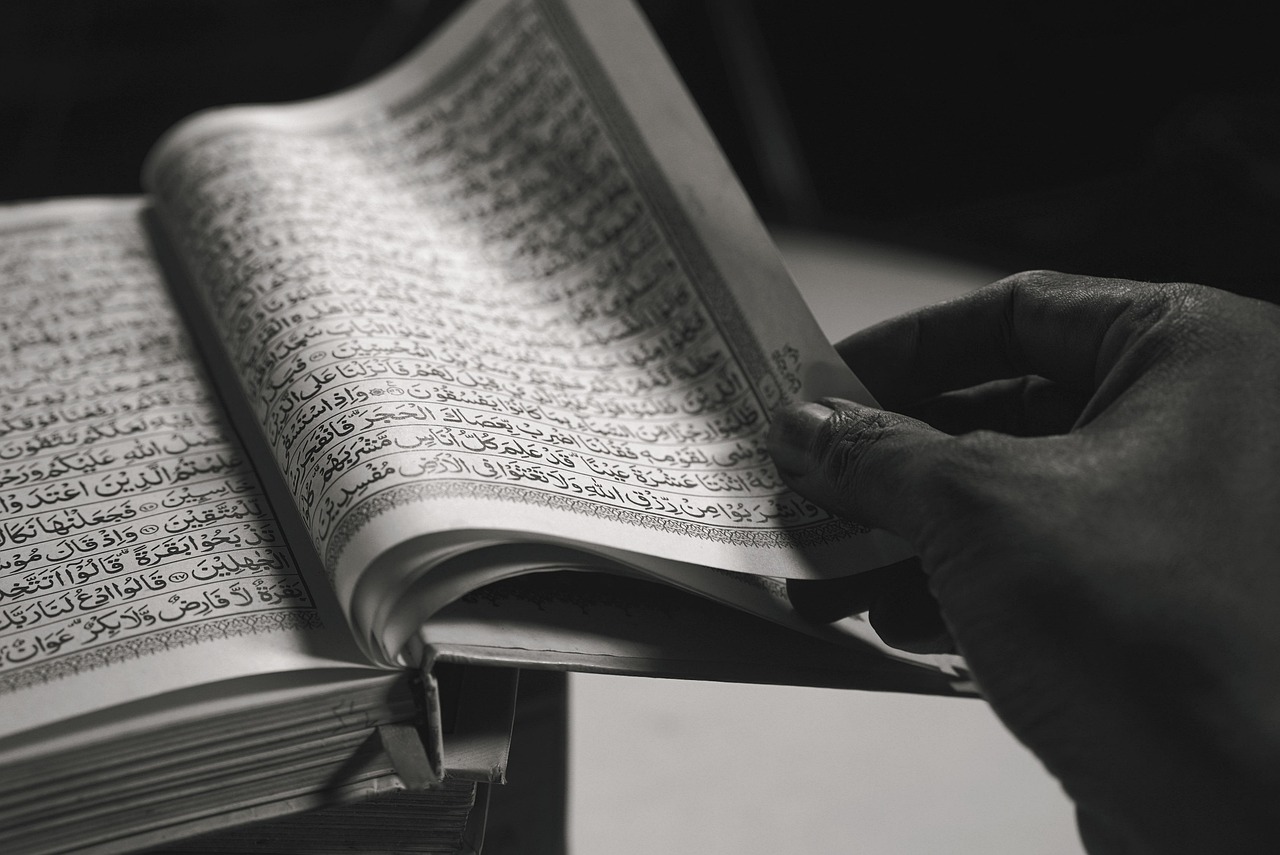
The Prophet PBUH said, “It will be said to the one who memorized the Quran, ‘Recite and rise up. Recite melodiously as you would in the world. Indeed, your rank will be according to the last ayah you recited.'”
In his final moments, the Prophet PBUH declared that he was leaving behind a treasure for his ummah: the Quran. And memorizing this treasure is one of the most virtuous acts a Muslim can do in their life. Learning the word of Allah by heart and implementing each lesson in daily actions is the perfect way to ensure one is living a life loved by Allah SWT.
Becoming A Hafiz & Its Virtues
The Prophet PBUH said, “The best among the Muslims are those who learn the Quran and teach it.”
The word “hafiz” is derived from the Arabic word “hifz,” which translates to ‘preservation,’ ‘guardianship,’ or ‘protection.’ And the term “hafiz” literally means “the guardian” or “the protector.” Although this term can be used for both genders, the female memorizers are usually called “hafiza.” The meaning of the word closely highlights the true nature of a hafiz. Because protecting is exactly what they do. Whether that be protection of their nafs from temptations, their akhirah from sins, or their daily life from deeds that lead towards harm.
The virtues of memorizing the Quran are numerous. However, the true pleasure of it is found in the akhirah.
Aisha RA narrated that the Prophet PBUH stated, “The one who recites the Quran and is proficient with it, then he will be with the righteous and noble scribes, the angels. And the one who reads it and stumbles in his recitation and finds it difficult will have two rewards.”
In another hadith, the Prophet PBUH said:
“Fasting and the Quran will intercede for a Muslim on the day of Judgment. Fasting will say, ‘O my Lord, I have kept them away from their food and their passions in the day, so accept my intercession for them.’ And the Quran will say, ‘I have kept them away from sleep in the night, so accept my intercession for them.’ And then Allah will accept their intercessions.”
There is another weak hadith that mentions the rewards the family of a hafiz will get.
The Prophet PBUH said, “Whoever memorizes and recites the Quran, making halal what it makes halal and haram what it makes haram, Allah will grant them entrance to Jannah because of it and grant them intercession for ten members of their family who were going to be sent to Jahannum.”
Ways To Memorize
There are numerous ways to memorize the Quran, each catering to different learning styles and routines. Although one is not bound by these. If one feels that these methods don’t align with their memorization goals, it is completely okay to form a routine based on personal preferences.
The Last Juz To The First
This method is one of the most common for memorizing the Quran. This method includes memorizing the last Juz (‘Amma) first because most students are already aware of many verses in it, and then continuing backward to Juz 29, 28, 27, and so on. It is used in many schools and hifz programs to teach the Quran in a way that makes the student familiar with the words of Allah faster than other methods.
The Longest Surah First
This method encourages students to learn Surah Baqarah first, as it is the longest surah in the Quran, and memorizing it is akin to memorizing almost 2 juz. It also serves to increase motivation, as it assures the student that if they can memorize the longest surah, then they can also memorize the rest of the Quran.
The Ottoman Method
This method is structured in a way where the student memorizes the last page of each Juz, then the second-to-last page, and then moves forward in the same category. This method allows the student to learn each juz of the Quran simultaneously.
Auditory Learning
Throughout human history, auditory learning has been the primary method of memorization. And humans are wired to learn through audio much faster than learning through written sources. Even in the time of the Prophet PBUH, the companions used to memorize the Quran by listening. Choosing a reciter whose pace matches one’s own, one should start with the surahs commonly recited in prayers, such as Mulk, Rahman, and Kahf, and then move on to more lengthy surahs.
The traditional method involves listening to a surah as many times as needed until one can recite it fluently, then moving on. One can also select a reciter who speaks their native language, as that can help due to the familiarity with the way of reciting.
Time-Based Learning
This method is perfect for both high-intensity learners and low-intensity learners. It includes setting a specific time goal and memorizing throughout it. For example, setting a time goal of 20 minutes every day and then memorizing for the whole 20 minutes.
Best Time For Memorization
Many teachers consider the morning the best time for hifz. Especially the time after Fajr is recommended because there is barakah at this time due to the hadith of the Prophet PBUH.
“Oh Allah, bless my nation in the early morning.”
This time is also recommended due to the quiet and the lack of distractions found in the morning. The time of tahajjud is also recommended. However, the time of memorization or recitation depends on each individual and their routines.
Best Age For Memorization
The best age for memorization is usually considered to be before the teenage years, because the mind is tender and can absorb more at a faster rate. The age bracket between 8 and 12 is also recommended because there are fewer distractions and responsibilities at that time, and hence, the child can dedicate more time to their learning. It also benefits women because the process of menstruation hasn’t begun yet, and they can learn throughout the month without any breaks.
How Long Does It Take To Memorize The Quran?
There is no definitive timeframe for memorizing the Quran. For some, it takes 3 years, while for others it can take a decade. The journey to becoming a hafiz depends largely on one’s abilities, the time devoted to the Quran, and how much one wants to learn it. There are even some who have memorized it in mere months.
The whole process is nothing short of a miracle and can take as much time as Allah wills. One of the most recommended things to do while striving for hifz is making as many duaa as one can. Repeatedly asking Allah to make memorization easy and to make one fluent in the Quran.
If you want to make things easier, consider downloading and installing the Quran Majeed app, where you can find all the tools you need to memorize the Quran in no time.