
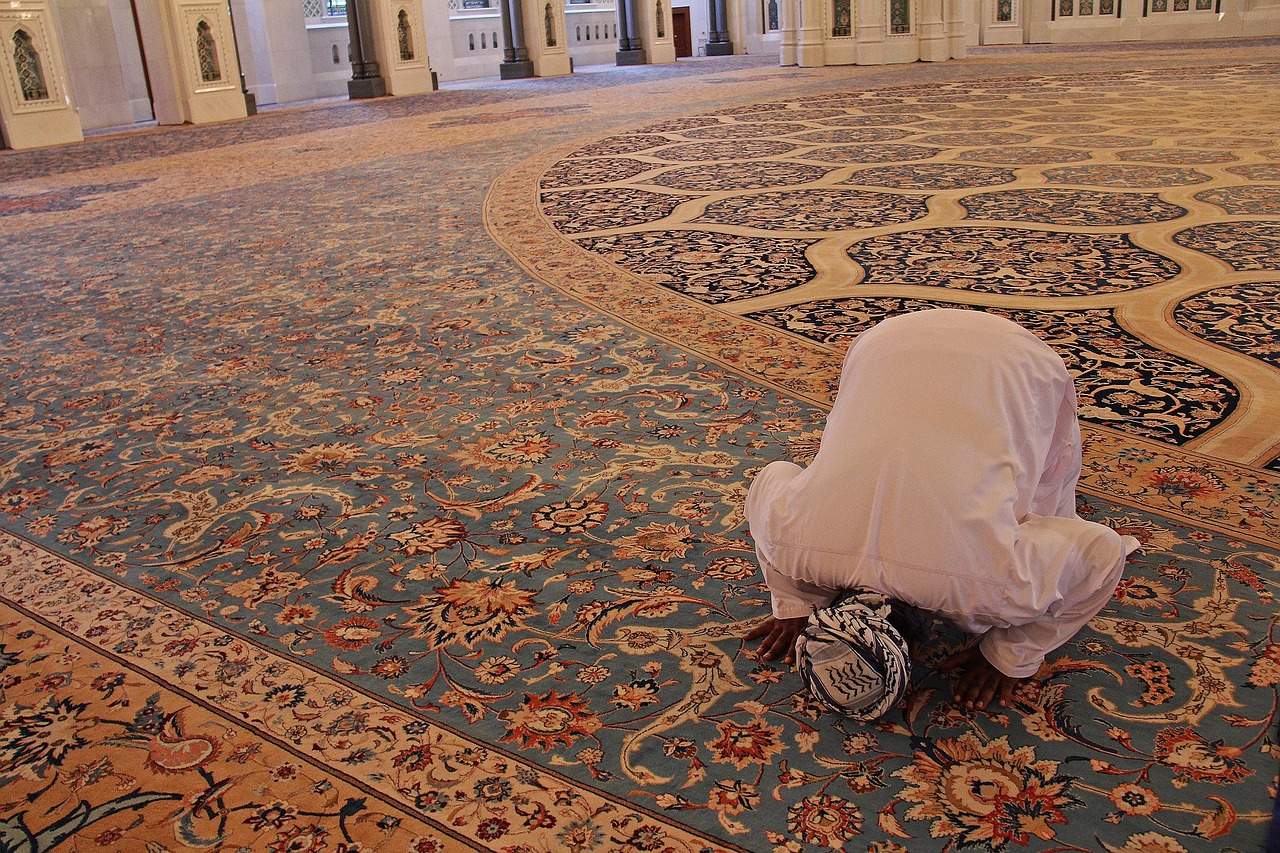
Every religion has certain days of the week that are preferred over others. In Islam, that day is Friday. There are numerous hadiths that describe the elevated status of this day.
The Prophet PBUH said, “Friday is among the best of your days, so frequently send blessings upon me on that day, for your prayers and supplications are presented to me.”
Apart from being one of the blessed days for worship and supplications, Friday is also the day when some of the core events of Islam took place, such as the birth of the Prophet PBUH, the creation of Adam AS, and the entrance of Adam AS into Jannah. And just like every other preferred day has a special worship attached to it, Friday has the “Jummah Prayer.” This blog will explore the prayer in detail while highlighting its virtues and the different rituals prescribed by the Prophet.
The Jummah Prayer & Its Reward
The word “Jummah” is an Arabic word and means “to gather.” Therefore, the Jummah prayer is literally a “prayer of gathering.” It is prayed in congregation, and there are two adhans (calls to prayer) given for it. There are various narrations and verses that highlight the reward one gets for performing this prayer.
In the tafsir of Surah Al-Jummah, verse 9, the following has been stated:
“Whoever performs ghusl on Friday, then applies perfume (if he has any), wears his best clothes, goes to the masjid, performs the voluntary prayers if he wishes, doesn’t bother anyone, and listens when the imam appears until he starts the prayer, then these actions will serve as an expiation for him for whatever occurs during that Friday and the next one.”
Praying The Jummah Prayer: A Complete Guide
Preparing For The Prayer
The Jummah prayer is similar to other prayers Muslims pray. This means that all the conditions applicable to other salahs also apply to the Jummah prayer. Therefore, before praying, one should make sure their clothes are clean and pure, they are not in a state of ritual impurity, they have wudu, and they have fulfilled all the other conditions required to make a prayer valid.
The Prophet PBUH has described the way one should prepare for Jummah. He, PBUH, says:
“Whoever takes a bath on Friday and bathes completely, leaves early and arrives at the mosque early, walks and does not ride to the mosque, sits close to the imam, listens to him, and doesn’t engage in idle talk, for every step he takes Allah will give him a reward of one year of fasting and one year of prayer at night.”
The hadiths also state that one should arrive early at the mosque.
Narrated Abu Huraira RA, the Prophet PBUH said: “When it’s Friday, the angels stand at the gate of the mosque and keep writing the names of the people according to their time of arrival. The one who comes to the mosque in the earliest hour is like the one who sacrifices a camel. The one who comes next is like the one who sacrifices a cow. The one who comes after this is like the one who sacrifices a ram, then a chicken, and then an egg. When the imam comes for the Jummah prayer, the angels fold their pens and listen to the khutbah.”
Arriving early doesn’t mean that one should use their phone or talk with others; rather, this time should be used to cultivate spiritual focus by engaging in remembrance (dhikr) or reciting the Quran.
Offering The Prayer
The Jummah prayer is of two rakats and is prayed like any other prayer. The only difference is in the intention (niyyah) of the prayer. The following is how Jummah should be prayed:
- Stand at the place of prayer and make an intention either silently or out loud: I intend to offer two rakaats fard of Friday prayer.”
- Pray the two rakats as one usually would, following the imaam. It is a sunnah to recite Surah Al-Ala in the first rakat and Surah Al-Ghashiya in the second rakat. Sometimes, the Prophet PBUH also used to recite Surah Jummah in the first rakat and Surah Munafiqun in the second rakat. However, if one recites any other surah, the prayer is valid.
- After this, the sunnah of the Prophet PBUH is to either pray 4 rakats in cycles of 2 at the masjid. Which means praying 2 rakats, saying salam, and then praying another two rakats. Or one goes home and prays only 2 rakats. This view is established on the basis of an authentic hadith found in Abi Dawud, which states:
“When Ibn Umar prayed the Jummah in Makkah, he would first pray two rakats, and then he would pray four rakats. However, when he offered Jummah in Madina, he prayed the Friday prayer, then returned to his house and offered two rakats. Someone mentioned this to him, and he replied that the Prophet PBUH used to do it.”
Note: There are also 4 rakats of sunnah that are prayed before the two rakats of Jummah prayer, but there is a difference of opinion regarding these in the fiqh. The number of sunnah rakats after the Jumma prayer may also vary across different fiqh schools. Therefore, it is necessary to check the rulings within one’s own fiqh before making any decisions.
Is Jummah Obligatory?
The view of most scholars is that the Jummah prayer is obligatory when its conditions are met. Such as:
- The one praying should be a Muslim.
- It is obligatory for males who have reached puberty.
- It is obligatory for those who are free. Therefore, slaves are not obligated to perform it.
- It is mandatory upon those who are mentally well, i.e., they don’t have any mental diseases such as dementia, Alzheimer’s, etc.
It is not obligatory upon women to pray the Jummah, but if they do attend, they are fulfilling their obligation, and their reward is with Allah. However, they don’t lose out on any reward if they choose not to attend.
The Khutbah Of Jummah
There are two khutbahs before the Jummah prayer, and they are a condition for the prayer to be valid. This is the view of the majority of the scholars, including the imams of the fiqhs. The evidence for it being obligatory is found in verse 9 of Surah Al-Jummah, in which Allah states,
“O ye who believe! When the call is heard for the prayer of the day of congregation, haste unto remembrance of Allah and leave your trading. That is better for you if you did but know.”
There is scholarly consensus that the khutbah is included in the phrase ‘haste unto remembrance of Allah,’ and that ‘remembrance’ here refers to the khutbah and the prayer.
How Late Can One Pray Jummah?
According to most scholars, the time of Jummah lasts until the beginning of the Asr prayer. However, it is better to pray it at the beginning of the time since that is how the Prophet PBUH used to pray it and also because delaying prayers without any valid reason is considered sinful.
Jabir bin ‘Abdullah said: “We prayed the Friday prayer with the Prophet PBUH, then we went back and tended to our camels.” When someone asked him about the time of the prayer, he replied, “When the sun passed its zenith.”