
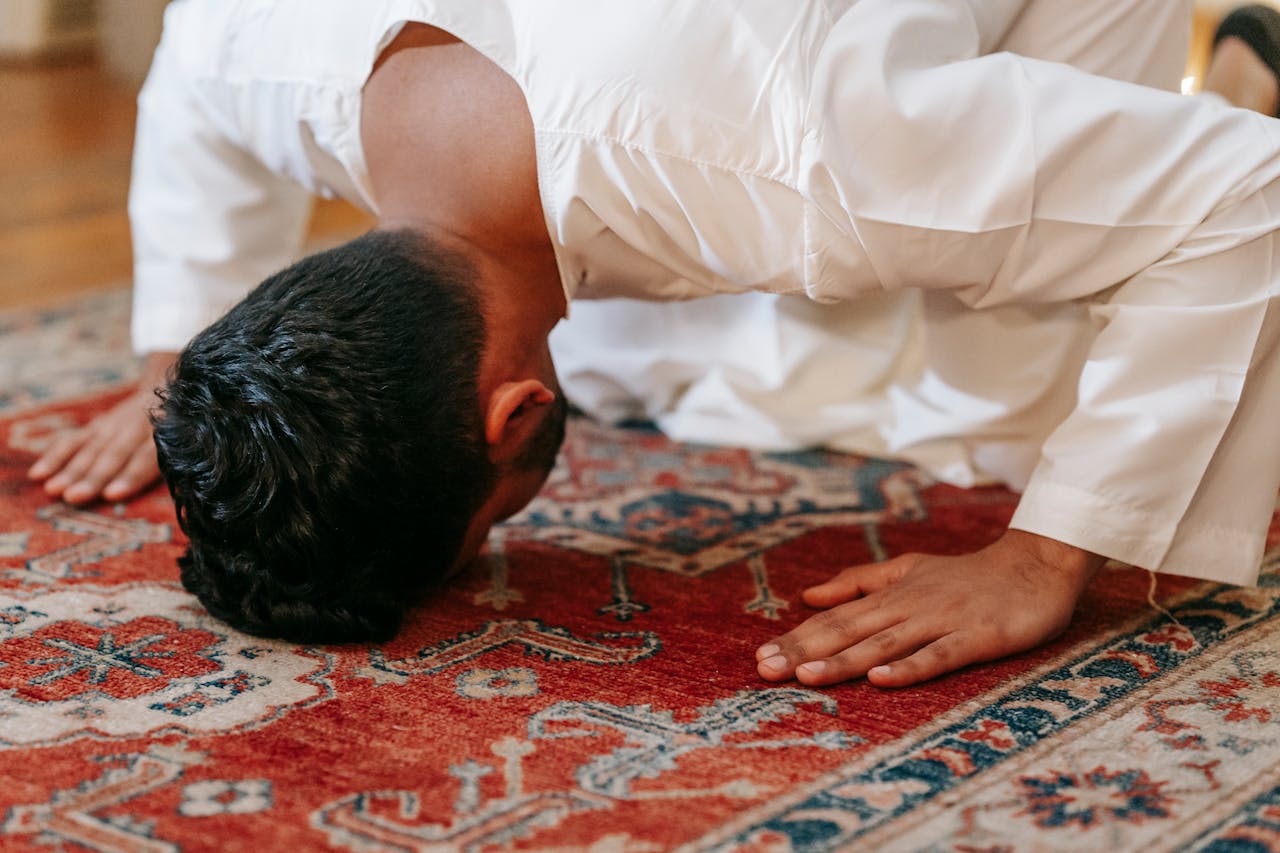
Ramadan is the ultimate month of connecting with one’s faith and their creator. Especially the last ten nights in which Laylatul Qadr is observed. These nights are of such spiritual importance that the Prophet PBUH used to perform a special form of worship, known as Itikaf. It is a deeply spiritual practice that allows a Muslim to step back from the world and focus on their faith as Ramadan draws to a close.
Itikaf: The Spiritual Seclusion
Itikaf is derived from the Arabic root words “A’kafa” and “U’kufa.” Both of these words translate to “stay in a place” or “accompany a place or a thing.” In the context of Shariah, it is a practice in which a Muslim spends a specified amount of time engaged in worship away from his worldly life. Itikaf is permissible for both men and women and carries the same rules for both genders.
Origin Of Itikaf
The practice of itikaf has been observed since the time of the Prophet PBUH.
Ibn Umar narrated, “The Messenger of Allah PBUH used to practice itikaf in the last ten days of Ramadan.”
There are several authentic reports that narrate that the wives of the Prophet PBUH also used to perform itikaf.
Aisha RA narrated that the Prophet PBUH used to perform i’tikaf in the last ten days of Ramadan until he passed away, and then his wives performed i’tikaf after him.
All of these hadiths point to the fact that i’tikaf is a proven, authentic, and encouraged spiritual practice that brings immense rewards for the one who observes it with pure intentions.
Conditions For A Valid Sunnah Itikaf
Itikaf is a form of worship. And just as any other form of worship has its own rules, I’tikaf is no different. It is compulsory for any Muslim observing i’tikaf to follow these rules to ensure the worship is performed in a way most beloved to Allah SWT. Such as,
- Being free from any kind of ritual impurities, such as janabah, menstruation, and nifaas (postnatal bleeding). If one is affected by these impurities, they should perform ghusl and then start their i’tikaf. Otherwise, the i’tikaf will not be valid.
- Fasting during the itikaaf. If one is observing itikaf according to the sunnah during the last ten days of Ramadan, it is compulsory to fast.
- For men, itikaf is valid when performed in a mosque, and it is usually not allowed in any other place, such as the home. For women, this ruling differs according to the schools of thought. Some state that women should perform itikaf in the masjid just like men, while others state that their homes should be the place. It is preferred to consult one’s own fiqh before starting itikaf to ensure one receives the maximum blessings and observes it in the manner most preferred by Allah.
Sunnahs Of Itikaf
The sunnahs of i’tikaf are based on the actions of the Prophet PBUH and what he used to do during the days he was observing seclusion from the world.
- To not visit any sick person.
- To not attend any funeral.
- To not be intimate with their spouse.
- Not to leave the place intended for itikaf except for a reason that can’t be avoided.
The evidence for this is found in the following hadith:
Aisha RA, “The sunnah for the one who is in itikaf in a mosque is to avoid attending a funeral, visiting a patient, embracing or touching one’s wife, or going out of the mosque for anything other than a necessity. There is no itikaf except inside a congregational mosque, and itikaf is not valid if done without fasting.”
Is Itikaf Compulsory?
Itikaf is an encouraged sunnah of the Prophet PBUH. It is highly recommended in Ramadan, especially in the last ten nights. Some opinions hold that it is a communal sunnah (sunnah e kifayah), meaning that some members of the community should observe itikaf for the last 10 days of Ramadan. If no one does it, the whole community will be held responsible.
Note: Although itikaf is a sunnah, it does become compulsory when one has vowed to observe it. The duration for that kind of itikad is a minimum of one day and one night. It is also compulsory to fast during this kind of itikaf.
Can A Muslim Perform Itikaf In Normal Days?
The worship of itikaf is not limited only to Ramadan and can be performed throughout the year. The Sunnah itikaf, one that is performed in the last ten days of Ramadan, is limited only to the month due to the Prophet PBUH performing it in the same manner. That said, if one performs itikaf at a time other than the last ten nights, it will be considered a nafl (voluntary) itikaf.
What To Do During Itikaf?
Voluntary Prayers
Voluntary prayers are the perfect way to grow closer to one’s deen because they are performed out of love for Allah SWT rather than due to an obligation. Especially during Ramadan, when the reward for good deeds is multiplied, voluntary prayers offer a chance to gain numerous blessings. Whether it is Tahajjud, Salat ul Dhuha, or Salat us Shukr, the one who is in itikaf should make it a priority to perform voluntary prayers.
Constant Dhikr
Continuously keeping the tongue moist with the remembrance of Allah is one of the most encouraged deeds in Islam. Constant dhikr brings immense barakah and removes sins. For those in itikaf, dhikr should be a constant in their routine. “Istaghfar” is the most preferred, but there are several others that a Muslim can recite to ensure the time of itikaf is spent in a state of constant dhikr.
Making Dua
Allah loves it when his servants ask him for something again and again. Whether it is forgiveness, barakah, or rizq, dua, it is encouraged because it humbles one. The act of raising the hands and pouring the heart out when no one’s looking is the way in which one becomes Allah’s beloved. Making constant dua ensures one experiences the true sweetness of faith and provides a chance to gain Allah’s mercy.
Reading The Quran
The Quran is a healer. It is a source of spiritual fulfillment. Many scholars state that reciting the Quran daily opens doors of barakah and happiness. Itikaf is an ideal time to develop a connection with the words of Allah. Reflecting on the verses and their meanings is a way to transform oneself during seclusion.